Dealing with FDA requirements is just part of the job in medical device engineering. For some teams it is unwelcome news that you should start considering FDA guidelines at the same time you start a new product-engineering project. It also has a bright side. If you plan, organize, and implement your project the right way, with the right controls and record-keeping, you will be preparing much of the documentation you need for your 510(k) submission.
The process of getting FDA clearance (the "letter") to market your device or software in the United States is intimidating for startups already running hard to get a first device to market. It gets easier with repetition, but only if it is done right.
The Short Version
- Classify your device by intended use and risk.
- Choose your premarket pathway: 510(k), De Novo, PMA, or Humanitarian Device Exemption.
- Build design controls once you're ready to develop, so the records you create are the records you submit.
- Plan for software, cloud, and cybersecurity if your device is connected.
- Prepare, submit, register, and stay inspection-ready.
Step 1: Classify Your Device
You first need to determine what kind of product you are bringing to market. FDA has classified about 1,700 generic types of devices, grouped into 16 medical specialties called panels. To find yours, think about the intended use, risk factors, and indications for use.
If you are not sure your product is a medical device at all, start with wellness device or medical device: how to choose the right path.
Medical devices fall into three classes based on risk:
- Class I (lowest risk). Requires FDA registration and listing, adherence to quality regulations, and proper labeling. Most Class I devices are exempt from premarket review. Typical examples are bandages, examination gloves, manual stethoscopes, and hand-held surgical instruments.
- Class II (moderate risk or complexity). Subject to performance standards and special controls, plus proper labeling. Most go through the 510(k) premarket notification process. Typical examples are powered wheelchairs, infusion pumps, pregnancy test kits, and contact lenses.
- Class III (highest risk). Includes devices that sustain life, are implanted, or present a significant risk of illness or injury. Requires FDA approval before going to market and is subject to the most rigorous testing and performance standards. Typical examples are pacemakers, heart valves, implanted neurostimulators, and breast implants.
The regulatory burden, timeline, and cost all rise as you move from Class I to Class III.
Step 2: Choose Your Premarket Pathway
Your classification points to your pathway. Generally, your device will go through one of these:
- 510(k) premarket notification. You show your device is "substantially equivalent" to a device already on the market, called the predicate. The 510(k) Third Party Review Program is a way to have eligible 510(k)s reviewed by an accredited third party, not a separate pathway.
- De Novo classification request. For a new, low-to-moderate-risk device with no predicate.
- Premarket approval (PMA). For the highest-risk devices. Requires clinical evidence of safety and effectiveness.
- Humanitarian Device Exemption (HDE). For devices that treat or diagnose rare conditions affecting no more than 8,000 people a year in the U.S.
If the jargon feels like a lot, you are not alone. Choosing the pathway is an early decision, and it shapes everything after it.
How the 510(k) works. There is no single FDA template for a 510(k). The agency publishes 510(k) Program guidance, and each submitter chooses a presentation. Your company picks a legally marketed device it considers substantially equivalent (as safe and effective), and your submission builds the case for that equivalence. Knowing these requirements up front does not change your engineering process so much as organize it. FDA requires 510(k) submissions to be sent electronically using its eSTAR template (since October 2023), and De Novo requests the same way (since October 2025), with limited exceptions.
Talk to FDA early. FDA's Pre-Submission (Q-Sub) program lets you get feedback on your plan before you submit. Two lessons from industry and FDA staff interviewed in 2020: build a clear narrative about who the device is for and what it does best, and do not hide the device's weaknesses. Teams that anticipate them and bring a plan to address them find FDA staff more willing to engage. FDA's own advice was to "come early, come often."
Step 3: Build Design Controls at the Right Time
Design controls typically begin once you're ready to start developing the product: after feasibility studies, proof-of-concept work, and early prototypes, once you have a clear direction for your FDA submission. Starting them literally on day one would give the FDA visibility into every early concept you tried and set aside, which you'd then have to explain; some competitors recommend starting that early anyway, which adds cost without adding protection.
Design controls are where your engineering process and your submission fit together. They include:
- User needs. Define and document what your user needs, including indications for use and how the product will be used. These become the framework for the design. See user needs and design input requirements.
- Intended markets and classifications. Identify each market you will sell in and its regulatory codes and classifications. In addition to FDA, you might look at Canada and Australia.
- A design and development plan. Document benchmarks of progress, who is responsible for each major step, and how the teams contributing input relate to each other.
- Design inputs. Define and document all inputs the design requires, such as physical, functional, and performance standards. Inputs should be objectively measurable.
- A design history file (DHF). Document all your design controls in one place: user needs, the plan, the inputs, and any other relevant record. Kept current and organized, it is an indispensable part of your submission.
- Risk management. Set up procedures that define the timing and nature of risk-management activities across the whole design process. ISO 14971 sets the expectations. Your record is the Risk Management File (RMF), the counterpart of the DHF.
- Hazard identification. Identify and document product hazards, the potential sources of harm to users.
- Document and record control. Keep systematic, organized records throughout.
FDA's Quality Management System Regulation (QMSR) took effect on February 2, 2026. It aligns FDA's quality system requirements with ISO 13485:2016, so check how your design documentation maps to ISO 13485 terms.
The same process prepares you for ISO certification, which matters for some international markets.
Step 4: Software, Cloud, and Cybersecurity
Medical devices that use software or an app can face complex testing and validation requirements. There are two main categories:
- SaMD (Software as a Medical Device). Software used for medical purposes that is not part of the hardware, such as image-processing software.
- SiMD (Software in a Medical Device). Software that runs the hardware, often called embedded software or firmware.
Both are subject to FDA regulation. Clinical decision support (CDS) software can be a device or a non-device depending on how it works: software that informs a provider's decision without replacing their independent judgment may fall outside regulation, and software that drives the decision is regulated. FDA revised its CDS guidance in January 2026. It now allows software that gives a single recommendation to qualify as non-device CDS, and it applies to tools for healthcare professionals.
Cloud and third-party software. Validation, cybersecurity risk assessment, and regulatory requirements can apply to any off-the-shelf or third-party software used with or in your device. Third-party apps and cloud data can be pushed updates without notice, which makes validation hard to complete. In general, a significant software update, or any change that substantially affects performance, may trigger additional FDA review, depending on the risk class and the nature of the change.
Cybersecurity. Any connected device is vulnerable to attack and needs a plan to protect its data and functionality. Build recurring testing and validation into your ongoing device management. FDA's premarket cybersecurity guidance (final, June 2025) and Section 524B of the FD&C Act set expectations for devices that meet the definition of a "cyber device," including a plan to monitor and address vulnerabilities and a software bill of materials (SBOM).
Related reading:
- How FDA regulates artificial intelligence in medical products
- FDA policy for device software functions and mobile medical applications
- Security isn't just a feature, it's a foundation
Step 5: Prepare, Submit, and Register
- Prepare your submission. Include the essential information about your device: nonclinical testing, clinical evidence, labeling, and design controls. High-risk devices may need additional information.
- Submit to FDA. Submit electronically, with any required fees. FDA's goal is to decide most 510(k)s within 90 FDA days, not counting time the file is on hold while FDA waits for your answers. De Novo requests have a 150-day review goal. Elapsed time is usually longer.
- Register and list. Register your establishment and list your device. Registration does not mean the device has been cleared or approved. It is an annual obligation, not a one-time step: registration is renewed every year between October 1 and December 31, with an annual fee.
Stay Inspection-Ready
Class II and III device makers are subject to routine FDA inspection, as are contract manufacturers, specification developers, repackagers, and contract sterilizers. Some high-risk Class I devices are also inspected. The law calls for inspection at least every two years for domestic Class II and III manufacturers, though FDA's actual frequency varies. FDA looks hard at your quality system and operating procedures, so document them thoroughly and follow them routinely. Inadequate or missing procedures usually lead to a warning letter.
If you receive a warning letter, FDA usually asks for a written response within 15 business days. Your response should explain:
- the steps you took to correct the violations,
- your plans to avoid them in future,
- documentation for each step,
- a timeline for changes that will take time, or
- your reasoning if you disagree with the findings.
Warning letters are public. For how marketing claims lead to them, see what happens when a wellness product crosses the line.
Do You Need a Partner?
It is hard for anyone who does not work with FDA every day to stay current with FDA and ISO rules for the device they want to market. An experienced engineering partner can help with verification testing, procedural and policy controls, quality agreements, and device research, and knows where mistakes and slowdowns tend to happen. That shortens a steep learning curve for your team and lets you focus on the product.
Be clear about who does what. C3 is an engineering partner, not a regulatory consultant. We build the documentation and engineering evidence, and we work with your regulatory consultant or one of our partners on the submission itself. Our Clinical Readiness service covers the gap analysis, DHF build or repair, and V&V that get a device submission-ready.
Frequently Asked Questions
When should I start thinking about FDA requirements?
Once you're ready to start developing the product, after feasibility studies, proof-of-concept work, and early prototypes, once you have a clear direction for your FDA submission. Starting design controls literally on day one gives the FDA visibility into every early concept you tried and abandoned, which you'd then have to explain; waiting until you're ready to commit to a direction keeps that exploration out of the submission record.
What is the difference between FDA clearance and approval?
A 510(k) device is cleared, because it is shown to be substantially equivalent to a legally marketed predicate. Approval applies to premarket approval (PMA), used for the highest-risk devices.
Does registering my device mean the FDA has cleared it?
No. Establishment registration and device listing are a separate, annual obligation. They do not mean the FDA has cleared or approved your device.
Do I need a regulatory consultant?
A regulatory consultant represents you to the FDA on your submission. An engineering partner like C3 builds the design controls, testing, and documentation the submission relies on, and works alongside your regulatory consultant.
Next Step
Close to a submission, or not sure what is missing? Start with the Clinical Readiness Assessment, or book a call with founder Craig Carder.
Keep Reading
- Wellness device or medical device? How to choose the right path
- User needs and design input requirements
- How FDA regulates artificial intelligence in medical products
- FDA policy for device software functions and mobile medical applications
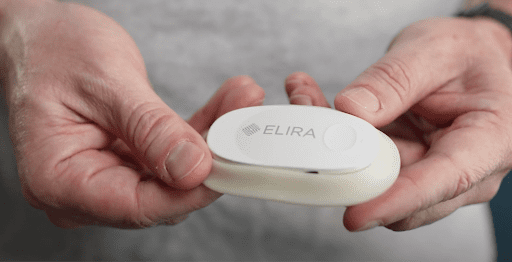
- How we helped Elira enter FDA trials
- How much does medical device verification and validation cost?